Sticker residue on clothing is one of the most frustrating household cleaning problems. Whether it comes from a price tag on a new shirt, a child’s sticker attached to a favorite jacket, a name label, or adhesive tape, the sticky residue left behind can attract lint, dirt, and dust, making clothes look dirty even after washing. Many people assume that simply washing the garment will solve the issue, but adhesive residue often survives a wash cycle and can become even harder to remove if exposed to heat from a dryer.
Understanding how to get sticker residue off clothes properly is important because different fabrics react differently to cleaning methods. Some materials can tolerate alcohol-based solutions, while delicate fabrics may require gentler treatment. Using the wrong approach can damage fibers, fade colors, or spread the adhesive deeper into the fabric. Fortunately, several proven techniques can remove sticker residue safely and effectively without ruining your clothing.
This comprehensive guide explains why sticker residue sticks to fabric, the best methods for removing it, common mistakes to avoid, and how to protect your garments from adhesive damage in the future.
Understanding Why Sticker Residue Sticks to Clothes
Sticker residue is typically made from pressure-sensitive adhesives. These adhesives are designed to bond firmly to surfaces while remaining flexible enough to be removed when necessary. When a sticker is attached to clothing, the adhesive can penetrate the tiny spaces between fabric fibers, creating a strong bond that remains even after the paper portion of the sticker is peeled away.
The type of fabric plays a significant role in how difficult the residue is to remove. Smooth synthetic materials often release adhesive more easily, while textured fabrics such as denim, fleece, cotton blends, and wool can trap glue deeper within their fibers. The longer the residue remains on the garment, the more likely it is to collect dust, oils, and dirt, making the stain appear larger and more noticeable.
Environmental factors also contribute to adhesive buildup. Heat exposure can soften the glue and cause it to spread further into the fabric. Over time, the adhesive may partially harden, creating a stubborn stain that resists ordinary washing. Understanding these characteristics helps determine the most effective removal method.
Preparing Clothes Before Removing Sticker Residue
Before applying any cleaning product, it is important to inspect the garment carefully. Check the clothing label for fabric care instructions and determine whether the material can safely handle solvents, warm water, or vigorous cleaning. Delicate fabrics such as silk, rayon, and wool require extra caution because aggressive cleaning can permanently damage their fibers.
If part of the sticker remains attached, remove as much as possible before treating the adhesive. Use a dull object such as a spoon edge, plastic scraper, or old credit card to gently lift away remaining paper. Avoid using sharp tools that could tear or snag the fabric. Removing the bulk of the sticker first allows cleaning agents to reach the adhesive more effectively.
Testing any cleaning solution on a hidden section of the garment is also essential. Even common household products can affect dyes or fabric finishes. A quick spot test reduces the risk of discoloration and ensures that the chosen method is safe for the specific material.
Why Heat Can Make Adhesive Stains Worse
Many people unknowingly make sticker residue harder to remove by exposing clothing to heat before treating the stain. Heat activates many types of adhesive, causing them to bond more firmly with fabric fibers. This is especially problematic when garments are placed in a clothes dryer before the residue has been completely removed.
Dryer heat can effectively set the adhesive into the fabric, making future removal significantly more difficult. The residue may spread slightly during the drying process, creating a larger affected area. Once heat has permanently bonded the adhesive, stronger solvents and repeated treatments may be required to break it down.
Ironing over a sticker stain can create similar problems. The heat from the iron softens the glue and pushes it deeper into the fibers. For this reason, clothing should always be inspected for adhesive residue before ironing or machine drying. Air drying is generally the safest option until the stain has been completely removed.
Using Rubbing Alcohol for Effective Adhesive Removal
Rubbing alcohol is widely regarded as one of the most effective solutions for removing sticker residue from clothing. Isopropyl alcohol works by dissolving the adhesive compounds that hold the residue together. Because it evaporates quickly, it typically leaves little moisture behind and is suitable for many common fabrics.
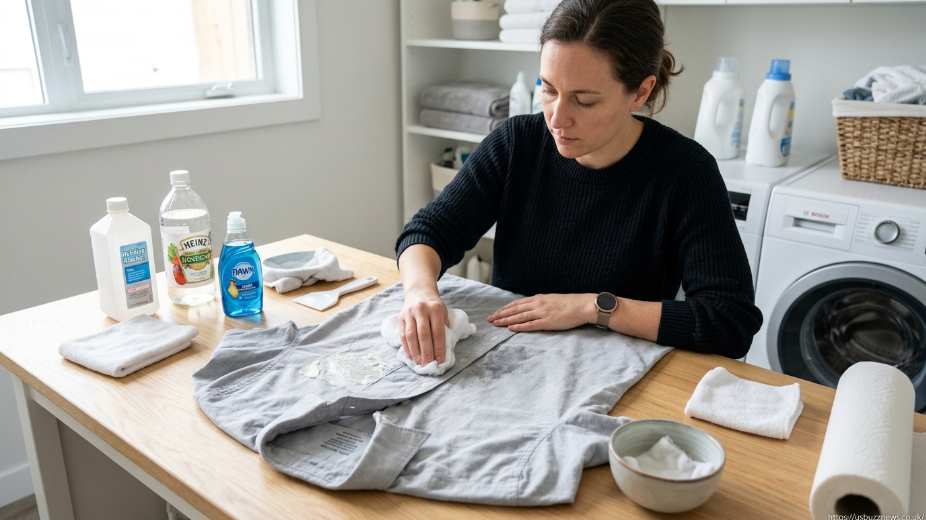
To use rubbing alcohol, apply a small amount to a clean cloth or cotton pad and gently dab the affected area. Allow the alcohol to sit for a minute so it can penetrate the adhesive. As the glue softens, gently rub the area using circular motions. The residue often begins transferring onto the cloth as it breaks down.
After the adhesive has been removed, rinse the area thoroughly with cool water and wash the garment according to its care instructions. Some stubborn stains may require a second application. This method is particularly effective for cotton, polyester, denim, and many synthetic fabrics commonly found in everyday clothing.
Removing Sticker Residue with Dish Soap and Warm Water
Dish soap is one of the safest and most accessible cleaning products for removing light adhesive residue. Because dishwashing liquids are formulated to break down grease and oils, they can also loosen many sticker adhesives without harming fabric fibers.
Begin by soaking the stained area in warm water. Warm water helps soften the glue and allows the soap to penetrate more effectively. Apply a small amount of dish soap directly onto the residue and gently massage it into the fabric using your fingers. A soft toothbrush can also be used to work the soap into textured materials.
Allow the soap to sit for several minutes before rinsing with warm water. Depending on the severity of the stain, the process may need to be repeated. Once the residue has disappeared, wash the garment normally. This method is particularly useful for children’s clothing, casual wear, and fabrics that may not tolerate stronger solvents.
How White Vinegar Helps Dissolve Sticky Residue
White vinegar is a popular natural cleaning solution that can effectively loosen adhesive stains. Its mild acidity helps break down sticky compounds while remaining relatively safe for most washable fabrics. Many people prefer vinegar because it is inexpensive, environmentally friendly, and commonly available in households.
For best results, warm the vinegar slightly before use. Apply it to a clean cloth and place the cloth over the affected area for several minutes. This allows the vinegar to penetrate the adhesive and soften it. Once the glue begins to loosen, gently rub the residue away using a soft cloth or brush.
After treatment, rinse the garment thoroughly and wash it according to the care label instructions. Although vinegar is generally safe, testing it on an inconspicuous area first is recommended, particularly for brightly colored fabrics. The method works especially well on residue left by labels, stickers, and adhesive tape.
The Freezing Method for Stubborn Sticker Residue
Freezing is a highly effective technique for dealing with thick or hardened adhesive residue. Cold temperatures cause the glue to become brittle, reducing its ability to cling to fabric fibers. This makes it easier to scrape away much of the residue before using liquid cleaning solutions.
Place the garment inside a plastic bag and leave it in the freezer for at least thirty minutes. Once the adhesive has hardened, remove the garment and carefully scrape the residue using a dull tool. In many cases, large pieces of glue will crack and lift away from the surface.
While freezing may not remove every trace of adhesive, it often eliminates the majority of the buildup. Any remaining residue can then be treated with rubbing alcohol, dish soap, or vinegar. Combining methods is often the most effective approach for particularly stubborn stains.
Using Oils to Break Down Sticker Adhesive
Oil-based products can also be useful for removing sticker residue because many adhesives dissolve when exposed to oils. Common options include coconut oil, olive oil, baby oil, and even peanut butter. These substances work by penetrating the adhesive and weakening its bond with the fabric.
Apply a small amount of oil directly to the sticky area and allow it to sit for several minutes. As the adhesive softens, gently rub the residue away using a cloth or soft brush. The glue should gradually lift from the fibers and become easier to remove.
Because oils can leave greasy stains behind, follow up with dish soap to remove any remaining residue. The garment should then be washed thoroughly. This method is especially effective for older adhesive stains that have dried out and become resistant to water-based cleaning methods.
Special Considerations for Delicate Fabrics
Delicate materials require extra care during sticker residue removal. Fabrics such as silk, lace, wool, and rayon can be damaged by harsh solvents or aggressive scrubbing. In these cases, gentle cleaning methods should always be used first.
Mild dish soap mixed with cool water is often the safest starting point for delicate fabrics. Instead of rubbing, gently blot the stain to avoid stressing the fibers. If the adhesive does not respond to gentle cleaning, professional dry cleaning may be the safest solution.
Dry-clean-only garments deserve particular attention. Attempting home treatments on expensive or specialty fabrics can lead to permanent damage. Professional cleaners have access to specialized solvents and techniques that can safely remove adhesive residue without compromising the integrity of the garment.
Preventing Sticker Residue Problems in the Future
Prevention is often easier than removal. When purchasing new clothing, take care when removing price tags and labels. Pulling stickers off too quickly can leave adhesive behind, especially if the sticker is strongly attached. Removing labels slowly and evenly reduces the likelihood of residue remaining on the fabric.
Applying gentle heat from a hair dryer before peeling a sticker can soften the adhesive and allow it to release more cleanly. This simple step is particularly useful for stubborn labels found on new garments. Taking a few extra seconds during sticker removal can save considerable cleaning effort later.
Regular garment inspection is also important. Checking clothes before washing and drying helps identify adhesive residue before it becomes permanently set. Quick action is often the key to successful removal. By treating residue promptly and using appropriate cleaning methods, most sticker stains can be eliminated without lasting damage.
Conclusion
Sticker residue may seem like a minor inconvenience, but it can quickly become a stubborn stain if not treated correctly. The adhesive used on labels, price tags, and stickers is designed to cling firmly to surfaces, making ordinary washing ineffective in many cases. Fortunately, several proven methods can safely remove sticker residue from clothes without damaging the fabric.
Rubbing alcohol, dish soap, white vinegar, freezing techniques, and oil-based solutions all offer effective ways to break down adhesive and restore garments to their original condition. The best method depends on the fabric type, the age of the stain, and the strength of the adhesive. Understanding how these cleaning techniques work allows you to choose the safest and most effective approach for each situation.
By acting quickly, avoiding heat exposure, and following fabric-safe cleaning practices, most adhesive stains can be removed completely. Whether dealing with a fresh sticker mark or a stubborn residue that has been set into the fabric, careful treatment can help preserve the appearance, comfort, and longevity of your clothing.