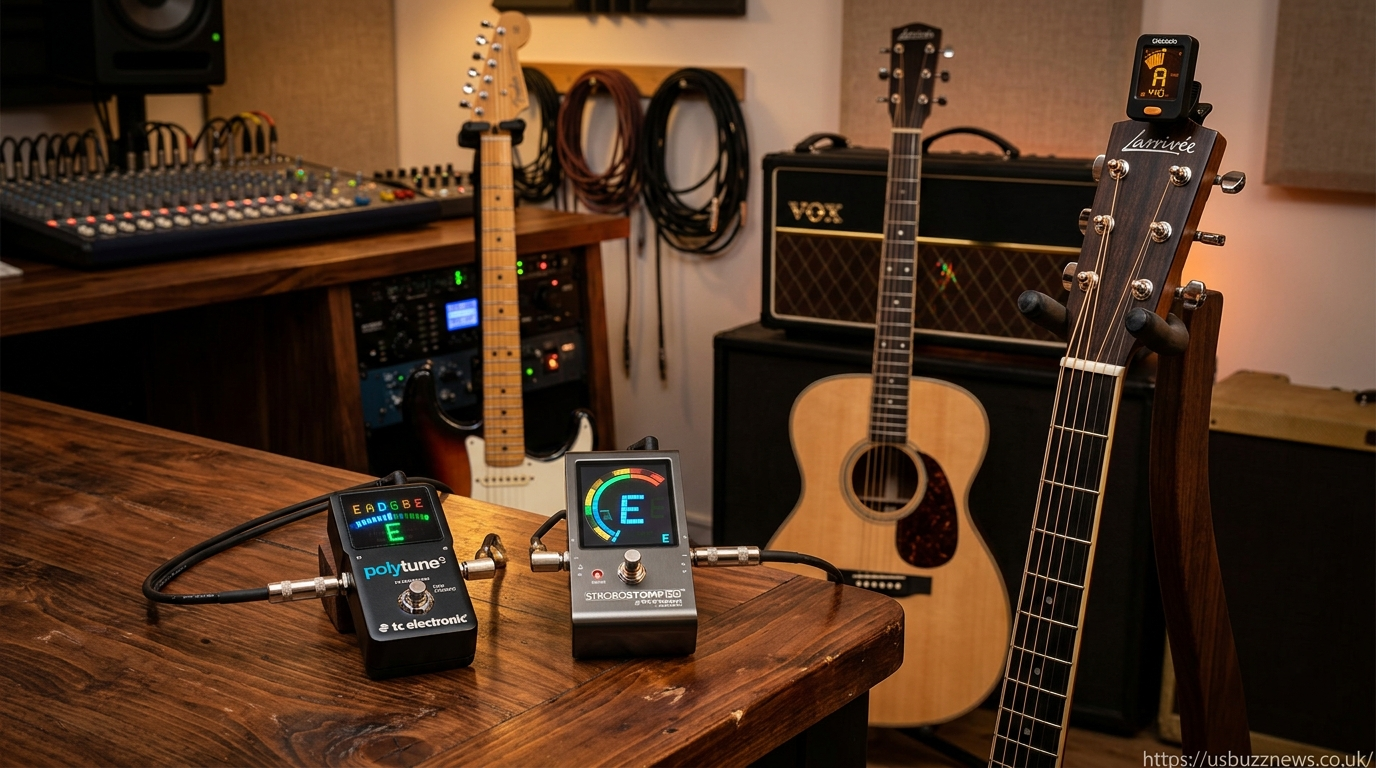
A guitar that is perfectly tuned can completely transform the way music sounds. Even the most expensive acoustic or electric guitar will sound weak, harsh, or unbalanced if the tuning is inaccurate. This is why guitar tuners have become one of the most important accessories for musicians at every skill level. From beginners learning their first chords to professional artists performing on stage, everyone depends on reliable tuning equipment to maintain consistent sound quality.
The modern guitar tuner market has expanded rapidly in recent years. Players can now choose from clip-on tuners, pedal tuners, chromatic tuners, polyphonic tuners, strobe tuners, rack tuners, and advanced smartphone tuner apps. Each type is designed for different playing situations, musical styles, and levels of precision. Some tuners focus on portability and convenience, while others are built for studio-grade accuracy and professional live performance.
Choosing the best guitar tuner is not always simple because every guitarist has different needs. Acoustic guitar players often prioritize compact clip-on tuners that work quietly in noisy environments. Electric guitarists may prefer pedal tuners that integrate directly into a pedalboard setup. Professional recording musicians usually look for strobe tuners capable of ultra-precise tuning adjustments. Understanding how these tuning systems work can help players select the right tuner for their playing style and musical goals.
Why Guitar Tuners Are Essential for Every Guitarist
Many beginner guitarists initially attempt to tune their instruments by ear. While ear training is an important musical skill, relying entirely on hearing can create problems, especially for inexperienced players. Human hearing naturally adapts to slightly incorrect pitches over time, which means guitars can slowly drift out of tune without players noticing immediately. A high-quality guitar tuner eliminates this issue by providing consistent and objective pitch detection.
Accurate tuning directly affects chord clarity, intonation, harmony, and overall musical performance. When a guitar is slightly out of tune, even basic chords can sound muddy or unpleasant. In live performances, poor tuning becomes even more noticeable because instruments must blend together correctly. Professional guitarists understand that tuning accuracy is one of the foundations of great tone and stage performance.
Modern guitar tuners are also valuable because they save time. Instead of repeatedly adjusting strings by ear, musicians can quickly achieve accurate pitch in seconds. This becomes especially important during concerts, rehearsals, recording sessions, and fast instrument changes on stage. Reliable tuners help musicians focus more on creativity and performance rather than constantly worrying about pitch accuracy.
Another major reason tuners matter is guitar maintenance. Instruments naturally shift out of tune because of temperature changes, humidity, string stretching, aggressive playing, and transportation. Guitar tuners help players regularly monitor pitch stability and maintain proper string tension. Consistent tuning habits can even improve the lifespan of strings and overall instrument setup quality.
Understanding How Guitar Tuners Work
Guitar tuners function by detecting the frequency produced by vibrating strings and comparing it to standard musical pitches. Most modern tuners are calibrated to A440, which means the A note above middle C vibrates at 440 Hz. When a string vibrates above or below the target frequency, the tuner indicates whether the pitch is sharp or flat.
Chromatic tuners are among the most versatile tuning devices because they recognize all twelve notes of the musical scale. This flexibility allows guitarists to use alternate tunings, tune other instruments, and experiment with creative musical styles. Chromatic tuning technology has become standard in many modern tuners because it offers far more versatility than older fixed-pitch systems.
Clip-on tuners detect vibration directly from the guitar headstock rather than using microphones. This allows them to function effectively even in loud environments where traditional sound-based tuners struggle. Pedal tuners, on the other hand, analyze the instrument signal directly through cables, making them extremely accurate and stable for stage use.
Strobe tuners use a more advanced visual display system that measures pitch deviations with exceptional precision. Instead of simply showing whether a note is sharp or flat, strobe tuners display moving patterns that slow down or stop when the pitch becomes perfectly accurate. Because of this detailed feedback, many professional guitar technicians and recording musicians consider strobe tuners the gold standard for intonation work and studio tuning.
Clip-On Guitar Tuners and Their Growing Popularity
Clip-on guitar tuners have become one of the most widely used tuning solutions in the world. Their popularity comes from their simplicity, affordability, portability, and reliability. These tuners attach directly to the guitar headstock and detect vibration through physical contact rather than external sound. This design allows them to work effectively during rehearsals, concerts, and noisy practice environments.
One of the biggest advantages of clip-on tuners is convenience. Many models are small enough to remain attached to the instrument permanently without interfering with playing. Guitarists can quickly check tuning between songs or during practice sessions without needing extra cables or equipment. This makes clip-on tuners especially attractive for acoustic guitar players and traveling musicians.
Modern clip-on tuners now offer highly advanced features that were once available only in expensive professional devices. High-resolution color displays, rechargeable batteries, polyphonic tuning technology, and strobe-level accuracy are increasingly common in premium clip-on models. Brands such as TC Electronic, D’Addario, Snark, and Peterson continue producing some of the most respected clip-on tuners available today.
Despite their convenience, clip-on tuners are not perfect for every situation. Some lower-quality models may struggle with response speed or accuracy during detailed intonation adjustments. Professional technicians sometimes prefer strobe or pedal tuners for setup work because they provide more stable and precise readings. However, for everyday tuning, modern clip-on tuners remain one of the best overall choices for most guitar players.
Why Pedal Tuners Dominate Live Performances
Pedal tuners are considered essential equipment for many electric guitarists and bass players who perform live. Unlike clip-on tuners, pedal tuners connect directly into the guitar signal chain and become part of a pedalboard setup. This direct connection creates highly accurate pitch detection while also offering practical stage features that many performers rely on.
One of the most important advantages of pedal tuners is visibility. Live performances often take place in dark venues with changing stage lighting, making small clip-on displays difficult to read. Pedal tuners solve this problem by using bright LED or LCD screens designed specifically for stage environments. Large displays allow musicians to tune quickly between songs without disrupting the performance.
Pedal tuners are also valued for their durability. Touring musicians need equipment capable of surviving transportation, stage conditions, and constant use. Popular models such as the Boss TU-3 and TC Electronic PolyTune series are known for rugged metal construction and long-term reliability. These tuners have become industry standards because they consistently perform under demanding professional conditions.
Another major benefit is signal muting. Most pedal tuners allow players to mute their output while tuning, preventing unwanted sounds from reaching the audience. This feature creates smoother performances and more professional stage management. Some advanced pedal tuners also include buffered outputs, customizable displays, and multiple tuning modes that improve overall pedalboard functionality.
The Advantages of Polyphonic Tuning Technology
Polyphonic guitar tuners introduced a major innovation in the tuning industry by allowing guitarists to tune all strings simultaneously. Traditional tuners require players to tune one string at a time, which can slow down performances and rehearsals. Polyphonic systems analyze multiple strings at once, instantly showing which strings need adjustment after a single strum.
This technology became especially popular among live performers because it dramatically speeds up tuning checks between songs. Instead of muting the guitar and tuning each string individually, musicians can quickly strum all six strings and make immediate corrections. This convenience helps reduce interruptions during concerts and keeps performances flowing smoothly.
TC Electronic played a major role in popularizing polyphonic tuning with its PolyTune series. These tuners combine polyphonic functionality with chromatic and strobe tuning modes, giving players multiple levels of accuracy depending on their needs. Many professional musicians appreciate having quick tuning options for stage use alongside detailed tuning modes for studio precision.
Polyphonic technology has also influenced the design of modern multi-effects processors and digital modeling systems. Many advanced guitar processors now include integrated polyphonic tuners as part of their software systems. As digital guitar equipment continues evolving, polyphonic tuning will likely become even more common in future music technology products.
Although polyphonic tuners are extremely convenient, some guitar technicians still prefer traditional strobe systems for highly detailed setup work. Polyphonic tuners are generally optimized for speed rather than microscopic precision. Nevertheless, for everyday playing and live performance, they remain among the most practical tuning innovations ever developed.
Strobe Tuners and Professional-Level Accuracy
Strobe tuners are widely regarded as the most accurate guitar tuners available. These tuners use highly detailed visual feedback systems capable of detecting extremely small pitch variations, often measured within fractions of a cent. Because of their precision, strobe tuners are commonly used by professional guitar technicians, studio engineers, and advanced musicians.
The core principle behind strobe tuning involves moving visual patterns that react to pitch differences. When the string pitch is incorrect, the pattern appears to move rapidly. As the player adjusts the string closer to perfect pitch, the movement slows down. When the pitch becomes perfectly accurate, the visual pattern appears completely still. This system provides much more detailed feedback than basic needle-style tuners.
Strobe tuners are especially important for intonation adjustment. Intonation refers to how accurately a guitar maintains pitch across the fretboard. Even if open strings are tuned correctly, poor intonation can cause notes higher on the neck to sound sharp or flat. Professional setup work often requires extremely accurate tuning equipment to ensure every fret plays correctly.
Brands such as Peterson have built strong reputations for producing industry-leading strobe tuners. Many experienced players trust Peterson products for both stage use and studio applications because of their reliability and advanced tuning precision. Modern strobe tuners now exist in pedal, clip-on, rack-mounted, and smartphone app formats, making professional-level tuning more accessible than ever before.
Despite their advantages, strobe tuners may feel overwhelming for complete beginners because their displays provide highly detailed information. Casual players often prefer simpler chromatic or clip-on tuners for daily use. However, musicians seeking maximum tuning accuracy usually consider strobe technology worth the investment.
Smartphone Guitar Tuner Apps and Digital Solutions
Smartphone guitar tuner apps have become increasingly advanced as mobile technology continues improving. Many free and premium apps now provide chromatic tuning, alternate tuning presets, metronomes, recording features, and strobe tuning systems directly through a phone or tablet. For beginners, tuner apps offer a low-cost introduction to guitar tuning without requiring additional equipment.
One reason smartphone tuners are popular is convenience. Nearly every guitarist already carries a phone, making tuner apps easily accessible during practice sessions or travel. Many apps also include educational features that help beginners learn string names, pitch recognition, and standard tuning patterns.
Modern smartphones now contain much better microphones than older devices, allowing tuning apps to detect pitch more accurately than in previous years. Some advanced apps even rival dedicated hardware tuners in terms of tuning precision. Professional-level strobe tuner apps from companies like Peterson have earned strong reputations among musicians seeking accurate digital tuning solutions.
However, smartphone tuners still have limitations compared to dedicated hardware. Microphone-based systems may struggle in noisy environments because surrounding sounds interfere with pitch detection. Physical tuners that detect vibration or direct instrument signals generally perform better during concerts and rehearsals. Battery drain and phone notifications can also become distractions during performances.
Even with these limitations, digital tuning technology continues evolving rapidly. Some musicians now rely almost entirely on mobile apps for practice and recording work. As smartphone processing power and audio recognition systems improve further, mobile tuning solutions may become even more competitive with traditional hardware tuners.
Choosing the Best Guitar Tuner for Your Needs
Selecting the best guitar tuner depends on several important factors, including musical style, performance environment, budget, and experience level. Beginners often benefit most from simple clip-on tuners because they are affordable, easy to use, and highly portable. These tuners provide enough accuracy for practice, lessons, and casual performances without overwhelming new players.
Electric guitarists who perform regularly may prefer pedal tuners because they integrate directly into live setups and provide excellent visibility on stage. Pedal tuners also offer additional features such as signal muting and buffered outputs that improve overall performance convenience. Touring musicians frequently prioritize durability and reliability when choosing tuning equipment.
Studio musicians and guitar technicians often require higher precision than average players. For these users, strobe tuners provide the detailed accuracy necessary for intonation adjustments, recording sessions, and advanced instrument setup work. While these tuners can cost more than standard chromatic models, their precision makes them valuable long-term investments for serious musicians.
Players interested in alternate tunings should also consider tuners with chromatic functionality and customizable calibration settings. Many modern tuners support drop tunings, open tunings, bass guitars, ukuleles, and other instruments. Versatility becomes especially useful for musicians who experiment with different genres and creative playing styles.
Ease of use should never be ignored when selecting a tuner. Fast response times, bright displays, intuitive controls, and stable pitch detection all contribute to a smoother playing experience. The best guitar tuner is ultimately the one that encourages consistent tuning habits and helps players maintain confidence in their sound quality.
The Future of Guitar Tuning Technology
The guitar tuner industry continues evolving alongside broader advances in digital music technology. Manufacturers are increasingly integrating tuning systems into wireless setups, multi-effects processors, amp modelers, and mobile editing platforms. Modern tuners are becoming smaller, faster, and more precise while also offering additional performance features.
Rechargeable battery systems are becoming more common in both clip-on and pedal tuners. Many musicians appreciate the convenience of USB charging and longer battery life, although some players still prefer replaceable batteries for extended touring reliability. Future tuner designs will likely continue improving power efficiency and portability.
Artificial intelligence and machine learning may also influence future tuning systems. Advanced software could potentially analyze playing style, string condition, environmental factors, and instrument setup to provide even more accurate tuning recommendations. Some modern digital processors already include automatic tuning assistance and advanced pitch correction technologies.
Wireless technology is another growing trend. Some companies are experimenting with wireless tuning systems that communicate directly with smartphones, pedalboards, or digital amplifiers. These developments could eventually reduce cable clutter and simplify stage setups for professional performers.
Despite ongoing technological changes, the main purpose of a guitar tuner remains simple and timeless. Musicians need accurate, reliable, and fast tuning tools that allow them to sound their best. Whether using a compact clip-on tuner at home, a professional strobe pedal in a recording studio, or a smartphone app during practice sessions, proper tuning will always remain one of the most important parts of great guitar playing.
Conclusion
Finding the best guitar tuner is not simply about choosing the most expensive or most advanced device. The ideal tuner depends on a guitarist’s playing style, musical environment, accuracy requirements, and personal preferences. Modern guitarists have access to an incredible variety of tuning options, including clip-on tuners for portability, pedal tuners for live performance, strobe tuners for professional precision, and smartphone apps for convenience. Each type offers unique advantages that can improve both practice sessions and live performances.
Accurate tuning plays a critical role in every aspect of guitar playing. It affects tone quality, chord clarity, recording performance, intonation, and overall musical confidence. Even small tuning problems can negatively impact the listening experience, which is why experienced musicians consistently emphasize the importance of reliable tuning equipment. A dependable guitar tuner allows players to focus on creativity and performance rather than worrying about pitch accuracy.
As technology continues evolving, guitar tuners are becoming faster, smarter, and more precise than ever before. Features such as polyphonic tuning, rechargeable batteries, wireless integration, and advanced strobe systems have transformed modern tuning devices into highly sophisticated musical tools. Still, the core purpose remains unchanged: helping musicians achieve perfect pitch quickly and consistently.
Whether you are a beginner learning your first songs, an acoustic guitarist practicing at home, a touring electric guitarist performing on stage, or a studio musician seeking flawless intonation, investing in a quality guitar tuner is one of the smartest decisions you can make. The right tuner not only improves your sound but also helps you become a more confident and professional player over time.