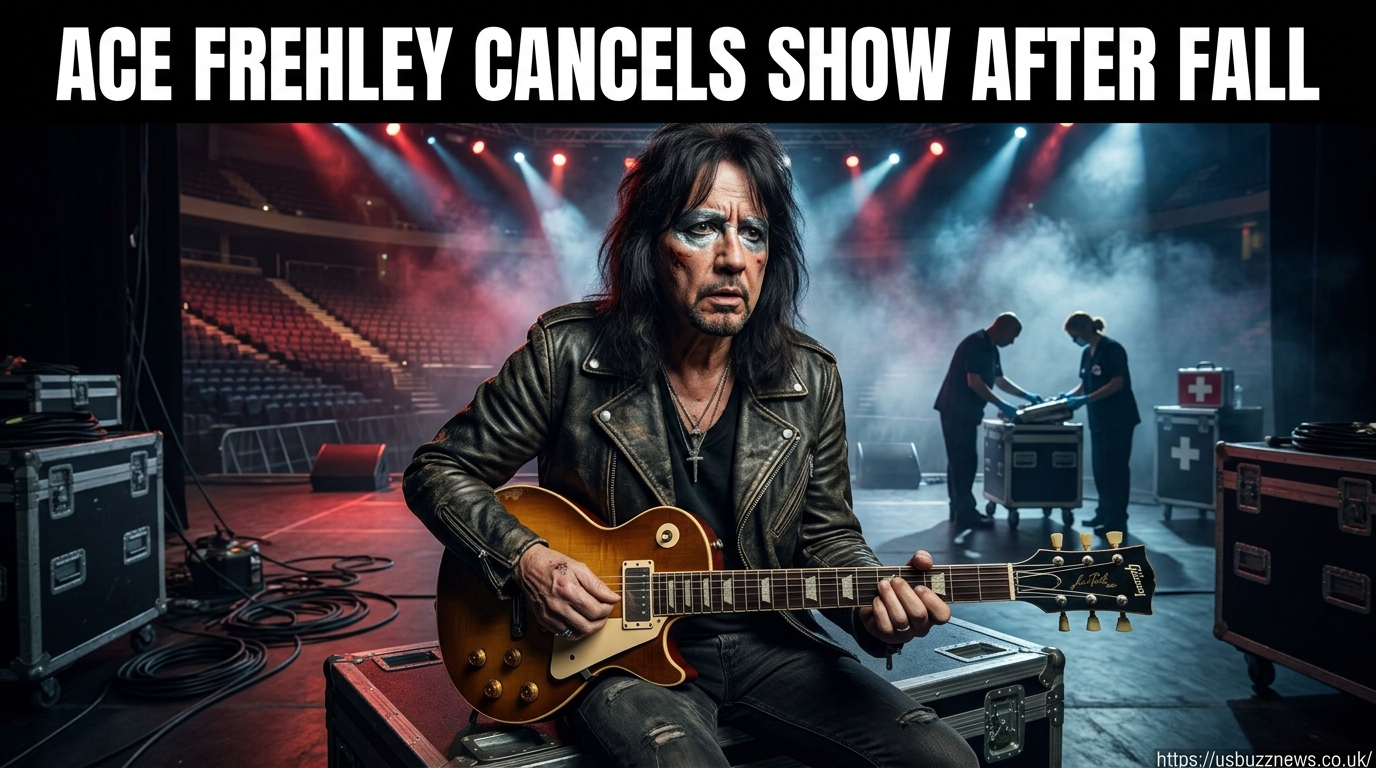
The sudden news that Ace Frehley canceled a scheduled live performance after suffering a fall in his studio quickly spread across rock music communities and entertainment media outlets. Known globally as the legendary former lead guitarist of Kiss, Frehley has remained an influential figure in classic rock for decades, and any update involving his health or touring schedule immediately attracts attention. The incident raised concerns among fans, not only because of the cancellation itself but also due to Frehley’s long history of physically demanding performances and previous stage-related injuries.
As discussions intensified online, many supporters searched for clarity about the seriousness of the fall, his recovery status, and whether future performances would be affected. While early reports suggested the incident was not life-threatening, the situation still highlighted the physical risks faced by aging rock musicians who continue to perform and record music well into later life. The story also reignited appreciation for Frehley’s legacy as one of rock’s most recognizable guitarists.
Ace Frehley and His Legacy in Rock Music History
Ace Frehley, born Paul Daniel Frehley in New York, rose to fame in the 1970s as a founding member of the iconic rock band Kiss. His “Spaceman” persona became one of the most recognizable characters in rock history, helping define the theatrical identity of the band during its peak popularity. Frehley’s guitar work stood out for its melodic structure, blues influence, and memorable solos that balanced technical skill with emotional expression.
Beyond his role in Kiss, Frehley also established himself as a successful solo artist. His 1978 solo album achieved major commercial success and demonstrated his ability to create music outside the band’s collaborative environment. Over the decades, he maintained a loyal fan base and continued releasing music that reflected his signature hard rock style. His influence can still be seen in countless guitarists who cite him as a major inspiration in shaping their own sound.
The Incident: What Led to the Concert Cancellation
The concert cancellation came after reports that Frehley experienced a fall inside his recording studio. According to early statements from his team, the incident required medical attention and precautionary evaluation. While the injury was described as minor, doctors advised him to avoid travel and rest temporarily, leading to the cancellation of his upcoming live performance.
The scheduled show had been highly anticipated by fans, making the announcement especially disappointing for those planning to attend. As news circulated, social media platforms quickly filled with messages of concern and support. Fans expressed hope that the situation was temporary and that Frehley would return to performing once fully recovered.
Although no severe complications were initially reported, the decision to cancel the concert reflected a cautious approach to his health. Given his age and long touring history, even small injuries can require extended recovery time to ensure full healing and prevent further complications.
A History of Stage Injuries and Physical Challenges
Ace Frehley’s recent fall is not the first time the guitarist has faced physical setbacks related to performance or studio work. Throughout his career, he has openly discussed experiencing multiple falls during live Kiss performances, particularly during the band’s early years when elaborate stage setups and platform boots were part of the act.
These performances, while visually iconic, placed significant strain on the body. Frehley often performed energetic movements while carrying heavy guitars and wearing elevated footwear, increasing the likelihood of slips or injuries. Over time, repeated physical stress contributed to long-term discomfort, particularly in his knees and joints.
In interviews, he has acknowledged that some of his most famous stage moments came with physical consequences. What audiences saw as theatrical rock spectacle often involved real physical risk behind the scenes, highlighting the demanding nature of classic rock performance culture.
Fan Reactions and Global Support
The news of Ace Frehley canceling his show after the fall sparked immediate reactions from fans around the world. Many longtime Kiss supporters expressed relief after learning that the incident was not initially reported as life-threatening. Across social media platforms, fans shared messages of encouragement and wished him a quick recovery.
For many listeners, Frehley represents a significant part of their personal music history. His work with Kiss during the 1970s and 1980s helped define the soundtrack of a generation, and his solo material continues to hold strong nostalgic value. Because of this deep emotional connection, any health-related news involving him tends to generate widespread attention and concern.
Younger fans also contributed to the online discussion, highlighting how Frehley’s guitar style continues to influence modern rock musicians. The mix of nostalgia and admiration created a strong wave of public support that reinforced his enduring cultural importance.
The Physical Demands of Rock Stardom
The incident also sheds light on the often-overlooked physical demands placed on professional musicians, particularly those who built their careers in the high-energy world of rock and roll. Touring schedules, repetitive performances, and constant travel can place enormous strain on the body over time.
For artists like Ace Frehley, decades of performing in large arenas, using heavy instruments, and engaging in physically intense stage movements contribute to cumulative wear and tear. Even outside of concerts, studio work and rehearsals involve physical activity that can become challenging with age.
As musicians grow older, even minor accidents can require longer recovery periods. This reality has become increasingly common among veteran performers who continue to engage with live audiences while balancing health considerations and professional commitments.
Media Coverage and Public Attention
Entertainment media outlets quickly picked up the story due to Frehley’s iconic status in rock history. Music publications, celebrity news platforms, and fan communities all reported on the cancellation, often emphasizing his legacy as a founding member of Kiss and a pioneer of theatrical rock performance.
The rapid spread of the story reflects the continued cultural relevance of classic rock musicians in modern media. Even decades after their peak fame, artists like Frehley remain widely recognized and frequently covered in entertainment journalism. Their influence extends beyond music into broader pop culture discussions.
Social media played a major role in amplifying the news. Fans, bloggers, and music pages shared updates instantly, creating a global conversation within hours. This digital reaction demonstrates how modern audiences engage with legacy artists in real time, especially when health or touring changes are involved.
Ace Frehley’s Career Beyond Kiss and Continued Creativity
While Ace Frehley is best known for his work with Kiss, his solo career has also played a significant role in his long-term success. After leaving the band, he formed Frehley’s Comet, a project that allowed him to explore creative independence and develop a distinct musical identity separate from Kiss.
Over the years, Frehley has continued releasing solo albums and performing live shows, maintaining an active presence in the rock music scene. His later work demonstrates consistency in his signature sound while also adapting to modern production styles. This ongoing creativity has helped him remain relevant to both older fans and newer audiences discovering classic rock.
His ability to sustain a career across multiple decades reflects both his artistic resilience and his strong connection with fans. Even with occasional setbacks, Frehley has consistently returned to music, reinforcing his status as a lasting figure in rock history.
Health Awareness and Aging Rock Legends
Ace Frehley’s fall has also contributed to broader discussions about health awareness among aging musicians. Many rock legends from the 1970s and 1980s continue to perform, but they often face increasing physical limitations due to years of touring and performance strain.
Fans today are more aware of these challenges and often encourage artists to prioritize well-being over demanding schedules. The entertainment industry has gradually shifted toward more flexible touring arrangements for veteran performers, allowing them to continue working while reducing physical risks.
This evolving perspective reflects a deeper understanding of the human side of music legends. Rather than expecting constant touring, audiences increasingly value the longevity and health of the artists they admire.
What the Future May Hold for Ace Frehley
Although the canceled show raised concerns, early reports suggest that Ace Frehley intends to continue his music career once he recovers fully. His passion for performing and recording remains strong, and he has expressed interest in continuing to release new material and potentially return to the stage.
Future touring plans will likely depend on medical advice and recovery progress. It is possible that schedules may be adjusted to reduce physical strain and allow for longer rest periods between performances. Such changes are common among veteran musicians who wish to balance health with ongoing creative work.
Regardless of future touring activity, Frehley’s influence on rock music remains firmly established. His contributions to Kiss, his solo work, and his impact on generations of guitarists ensure that his legacy continues to hold significant importance in music history.
Conclusion: A Temporary Setback for a Rock Icon
Ace Frehley canceling a show after suffering a fall serves as a reminder of both the physical demands of rock performance and the enduring legacy of one of the genre’s most influential guitarists. While the incident caused concern among fans, early information suggests that it was a precautionary situation rather than a severe health crisis.
The strong response from fans highlights the deep connection between Frehley and his audience, built over decades of groundbreaking music and unforgettable performances. His role in shaping rock history remains undisputed, and his influence continues to inspire musicians across generations.
As he recovers, fans around the world remain hopeful for his return to music and live performance. Whether on stage or in the studio, Ace Frehley’s impact on rock culture continues to resonate, proving that his legacy extends far beyond any temporary setback.