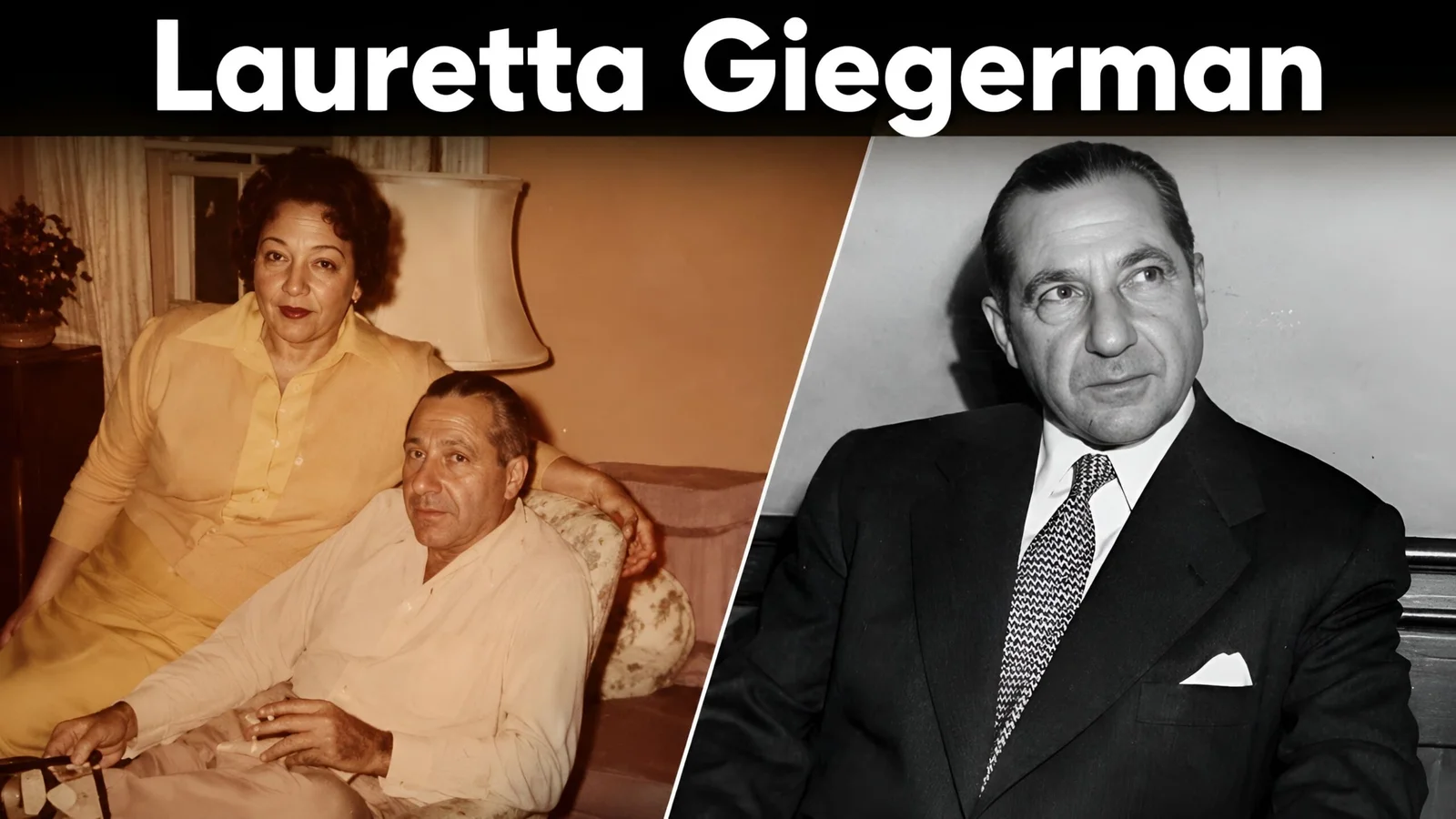
Who Was Lauretta Giegerman?
Lauretta Giegerman was a private American woman best known as the wife of Frank Costello, one of the most influential figures in American organized crime history. While her husband became a nationally recognized name because of his role in the Mafia, political connections, gambling networks, and public investigations, Lauretta lived a much quieter life away from newspapers and public attention. Her story is interesting because she represented the hidden personal side of a man whose life was surrounded by controversy, power, and danger.
Unlike many people connected to famous historical figures, Lauretta did not build a public identity through interviews, books, or appearances. She avoided fame and remained largely unknown outside of her connection to Frank Costello. This privacy has made her life a subject of curiosity among historians and people interested in the personal lives of figures from the American Mafia era.
Lauretta Giegerman’s biography is not filled with public achievements or dramatic headlines of her own. Instead, it focuses on her role as a supportive partner, her ability to maintain a private household, and her experience living alongside one of the most powerful organized crime figures of the 20th century. Her life reflects the experiences of many women who existed behind the scenes during important moments in American history.
Early Life and Background of Lauretta Giegerman
Information about Lauretta Giegerman’s early life is limited because she rarely spoke publicly about herself. Historical accounts suggest that she was born in New York during the late 19th century and came from a German Jewish immigrant background. Some records list her birth as October 28, 1894, in Manhattan, New York, although details about her childhood and education remain limited.
She grew up during a period when New York City was experiencing major social and cultural changes. The city was becoming a center for immigration, business, entertainment, and political activity. Many immigrant families worked hard to establish themselves in America, and Lauretta’s upbringing reflected the challenges and opportunities faced by families building new lives.
Although there are few confirmed details about her parents, siblings, or personal ambitions, available information suggests that Lauretta was raised in a traditional environment where family and personal relationships were highly valued. Her later life showed a strong preference for stability and privacy rather than public recognition.
Lauretta Giegerman’s Life Before Marriage
Before becoming known as Frank Costello’s wife, Lauretta reportedly had connections to the entertainment world. Some historical descriptions identify her as a Broadway showgirl who performed under the name “Bobbie” or “Bobby.” During the early 1900s, Broadway was a growing cultural industry that attracted many young performers seeking independence and new opportunities.
The entertainment scene in New York during this era was changing rapidly. Performers often became part of a social world filled with actors, musicians, businessmen, and public figures. For many young women, working in entertainment provided a chance to experience a different lifestyle than traditional domestic roles.
However, Lauretta’s time connected to entertainment appears to have been relatively brief. After her relationship with Frank Costello developed, she moved away from public performance and focused on her personal life. Unlike many entertainers who continued seeking attention, Lauretta chose a more private path.
Her transition from performer to homemaker reflected a major change in her life. She moved from a world of public performance into a private role connected to one of the most discussed figures of the American underworld.
Marriage Between Lauretta Giegerman and Frank Costello
Lauretta Giegerman married Frank Costello, whose birth name was Francesco Castiglia, in the early 20th century. Records commonly place their marriage in 1914 or 1918, with Frank Costello sources noting a marriage to Lauretta “Bobbie” Geigerman on September 22, 1914. Their relationship lasted for nearly six decades until Frank Costello’s death in 1973.
At the time of their marriage, Frank Costello was still building his reputation. He would later become associated with the Luciano crime family and become one of the most influential organized crime leaders in New York. His approach was often described as based more on negotiation, relationships, and influence rather than public violence.
Lauretta’s marriage placed her in a unique position. She was connected to a powerful figure but did not participate in his public activities. She remained focused on their personal relationship and avoided becoming part of the criminal world that surrounded her husband.
Their long marriage became one of the most notable personal relationships connected to organized crime history. While many relationships around powerful crime figures were unstable, Lauretta and Frank remained together through decades of change, legal problems, and public attention.
Life as the Wife of a Mafia Figure
Being married to Frank Costello meant Lauretta lived during one of the most complicated periods in American organized crime history. Costello became known as a major figure in the American Mafia, especially through his connections to gambling operations, political circles, and the Luciano crime family. He was often described as a strategic and influential crime leader.
Despite her husband’s reputation, Lauretta stayed away from criminal activities and public controversy. She was not known to be involved in business decisions, political relationships, or illegal operations. Her role was primarily personal, providing support and maintaining their private life.
Many accounts describe Lauretta as someone who preferred a calm home environment. She did not seek media attention or attempt to benefit from her husband’s reputation. In an era when some figures connected to organized crime became famous themselves, Lauretta remained almost invisible.
Her ability to maintain privacy was unusual considering the level of attention surrounding Frank Costello. She represented the quiet side of a very public and controversial period in American history.
The 1957 Assassination Attempt on Frank Costello
One of the most dramatic events connected to Lauretta Giegerman’s life occurred in 1957 when Frank Costello survived an assassination attempt. On May 2, 1957, Costello was shot in the lobby of his apartment building in Manhattan. The attack was connected by authorities and historians to conflicts within organized crime, particularly involving rival Vito Genovese.
The shooting became one of the most famous moments in Mafia history because Costello survived and later stepped away from his leadership role. The event showed the risks surrounding powerful figures in organized crime and affected the direction of New York’s criminal organizations.
For Lauretta, the assassination attempt represented one of the most frightening moments of her marriage. However, she continued maintaining the same private lifestyle she had followed for decades. She did not use the incident to gain attention and remained away from public discussions.
The event highlighted the contrast between Frank’s public life and Lauretta’s private world. While newspapers focused on the attack and its criminal implications, Lauretta remained focused on her family life and personal relationship.
Lauretta Giegerman’s Lifestyle and Personal Image
Lauretta Giegerman developed a reputation as a woman who valued privacy, loyalty, and simplicity. Unlike the glamorous image often associated with crime families in popular culture, her life appeared much more reserved. She did not chase publicity, and she avoided becoming a celebrity figure because of her husband’s fame.
Reports about the Costello household describe a comfortable but relatively private lifestyle. The couple lived in upscale New York locations, including a residence connected with Central Park West, but Lauretta was not known for public displays of wealth or luxury.
Her personality became one of the most discussed parts of her identity. She was often described as calm and supportive, someone who created stability in a life surrounded by uncertainty. Her ability to remain outside the spotlight helped separate her personal identity from her husband’s reputation.
Lauretta’s story challenges the common image of people connected to organized crime figures. She was not a public participant in her husband’s world but rather someone who lived beside it while maintaining her own private existence.
Death, Legacy, and Historical Importance of Lauretta Giegerman
Frank Costello died on February 18, 1973, after suffering a heart attack in Manhattan. His death marked the end of the life of one of America’s most recognized organized crime figures. Lauretta survived him, but details about her later years remain limited because she continued to avoid public attention.
Today, Lauretta Giegerman is remembered mainly because of her connection to Frank Costello, but her story offers a different perspective on organized crime history. While historians often focus on powerful men, their careers, and their conflicts, Lauretta’s life shows the personal side of those historical moments.
Her legacy is based on discretion rather than fame. She represents the many individuals whose lives were connected to major events but who remained outside the public record. Her long marriage, private lifestyle, and ability to maintain normalcy during difficult years continue to make her an interesting figure.
The story of Lauretta Giegerman remains a reminder that behind every famous historical figure there are often people whose experiences are quieter but still meaningful. Her life was not defined by headlines or power but by loyalty, privacy, and the ability to navigate a complicated world without becoming part of its public drama.
Conclusion
Lauretta Giegerman’s life remains a fascinating yet private chapter connected to one of the most well-known figures in American organized crime history. While Frank Costello became famous for his influence, power, and role in the Mafia world, Lauretta chose a completely different path by staying away from public attention and living a quiet personal life.
Her story shows the importance of looking beyond famous names and understanding the people who stood beside them. Lauretta was not known for seeking fame, wealth, or recognition, but for her loyalty, privacy, and long-lasting relationship with Frank Costello. Her ability to maintain a sense of normal life during decades of uncertainty made her a unique figure in the history surrounding the American underworld.
Although many details about Lauretta Giegerman’s personal journey remain limited, her legacy continues through the curiosity surrounding her life. She represents the often-unseen individuals behind major historical figures, reminding us that every famous story also includes quieter voices that deserve attention.